
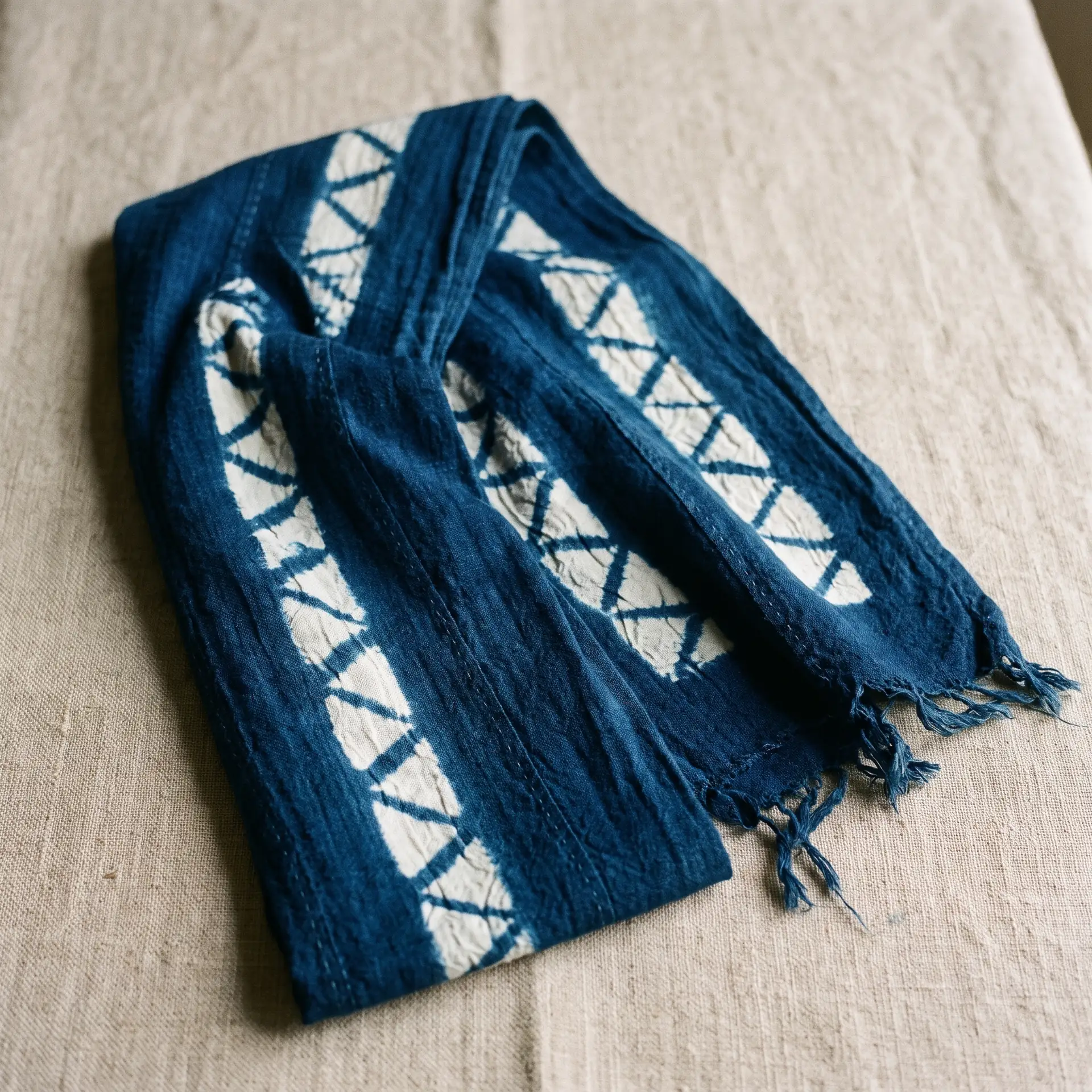
Scarf
Crocodile lozenge scarf
Rows of triangle-filled lozenges
180 × 60 cm
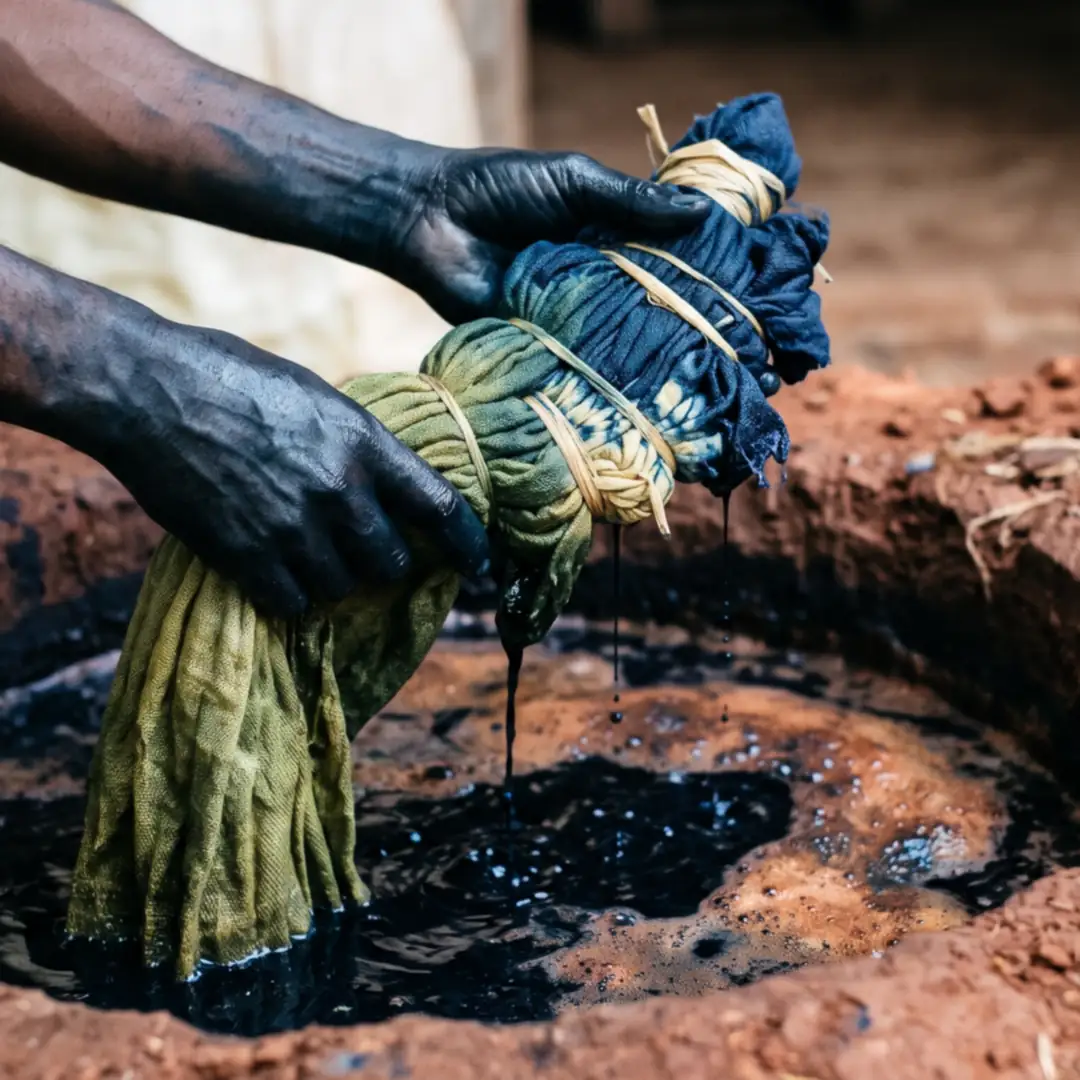
Atelier Ndop · Foumban
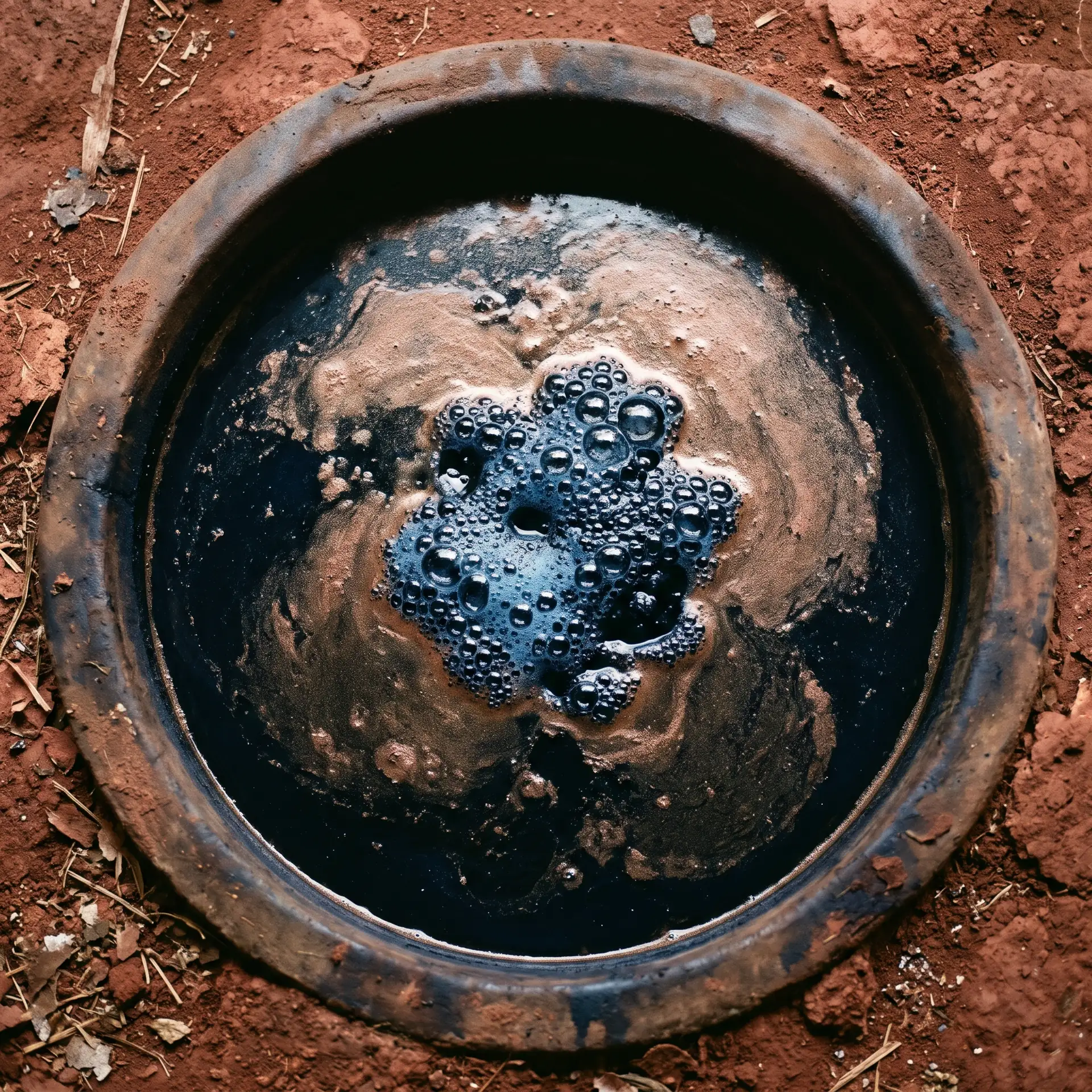
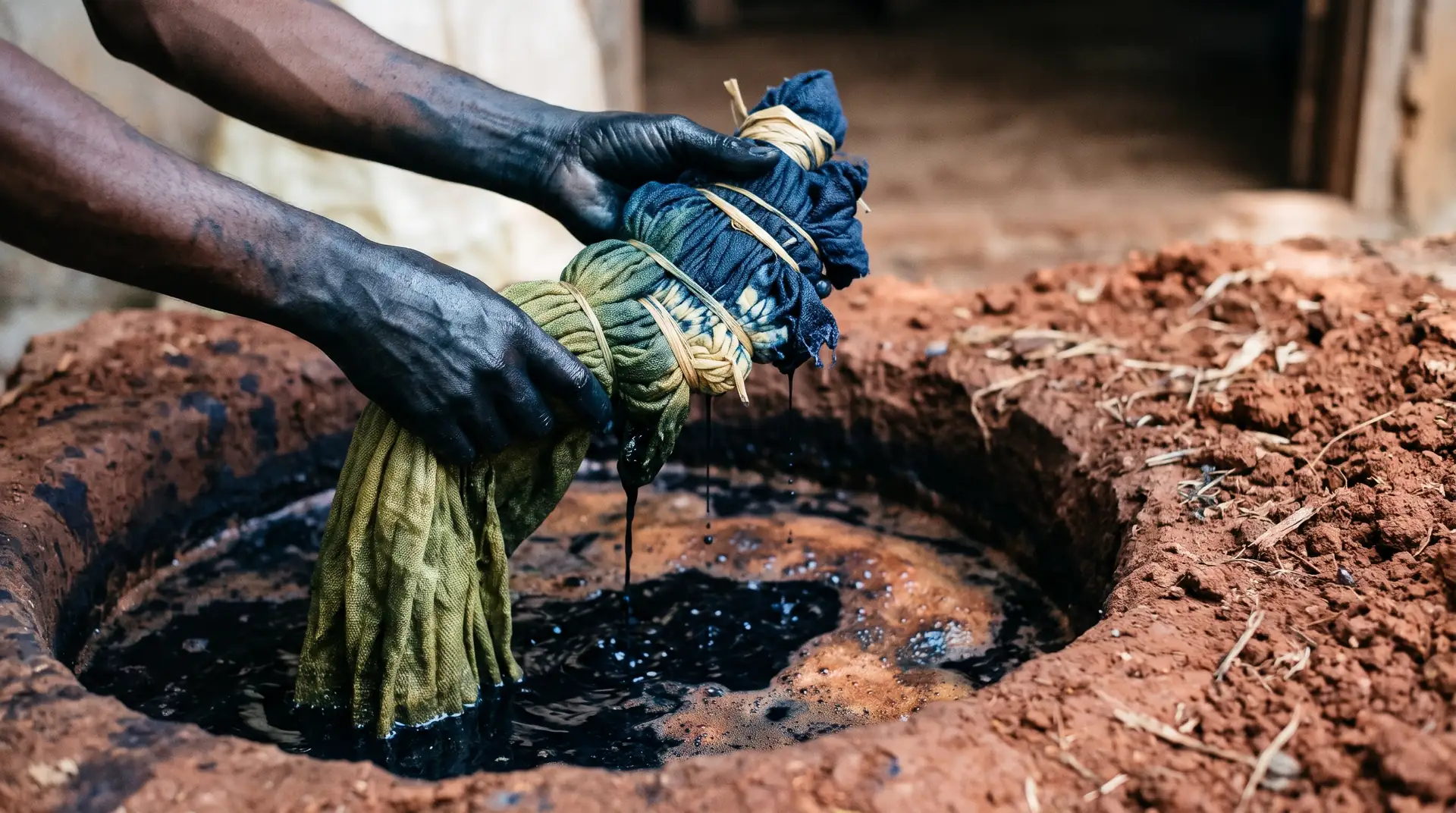
Hand-dyed ndop from our atelier in Foumban. The cloth leaves the indigo pit green and turns blue as it meets the air.
The story of ndop
Ndop is the emblematic cloth of the traditional chieftaincies of the Cameroon Grassfields, in the West and North-West regions.
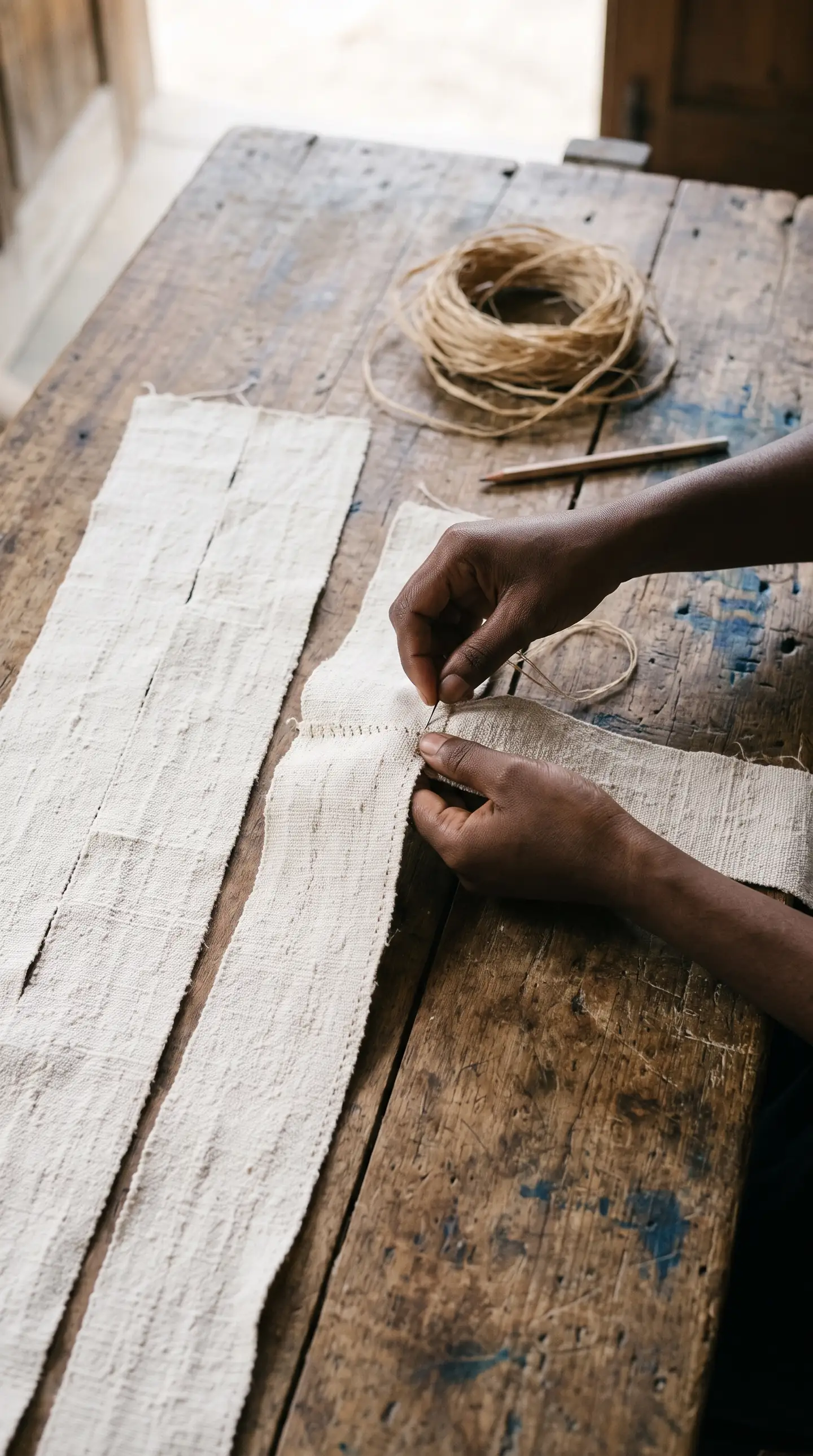
It begins as narrow strips of hand-spun cotton, woven on a loom and sewn edge to edge into one large sheet.
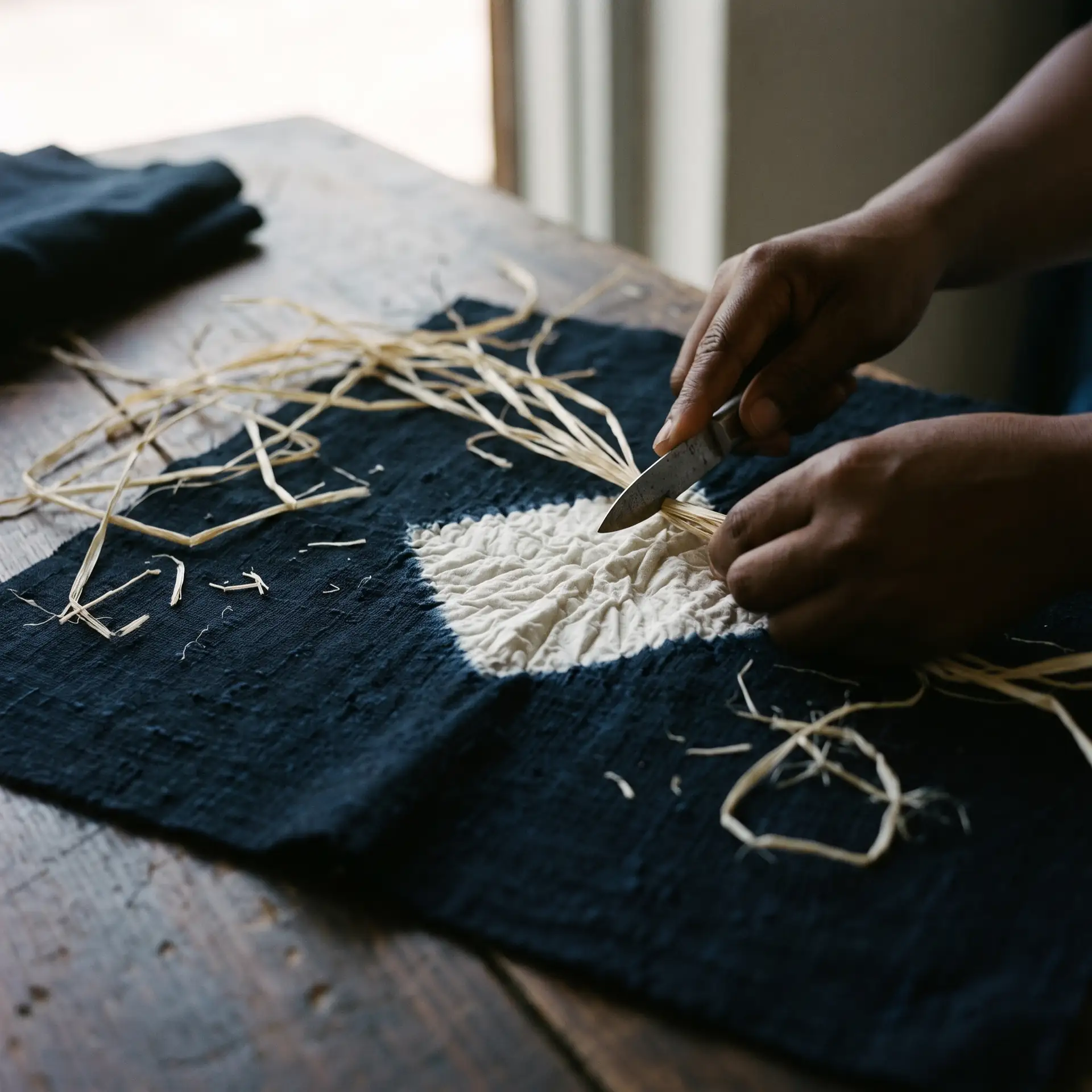
The motifs are drawn on the cotton, then stitched so tightly with raffia that the dye cannot reach them. After the indigo, the stitches are unpicked, and the motifs stay white on blue.
Ndop hangs as a royal backdrop at state events and ceremonies, and is worn by the fon and notables. It is a cloth of mourning too, at times a king’s shroud. Princes, princesses and queen mothers still wear it at festivals and funerals.
Paired leopards stand for Grassfields leaders. The lozenge filled with triangles evokes the crocodile, royal power and fecundity; the diamond recalls fertility and motherhood. Tarantulas, toads and lizards carry peace, fertility and prosperity. Moons and stars appear too, with no meaning recorded.
Ndop belongs to royalty and to mourning. We dye in its tradition and leave its meanings to those they belong to.
Ndop UI, the component library this page is built with, is named after this cloth.
Sources: Cleveland Museum of Art, The Met, Philadelphia Museum of Art, Kaji, 2023, Essel, 2021, Darnaude, 2023.
Make your own cloth
We stitch your pattern in raffia, dye it in the pit, and unpick it by hand. Each motif below is one the sources record on ndop cloth.
Row 1 · Crocodile lozenge · Royal power and fecundity
Row 2 · Moon · Shown on ndop without a stated meaning
Row 3 · Diamond · Fertility and motherhood
Row 4 · Star · Shown on ndop without a stated meaning
Motifs per row
8Depth of indigo
Off shows the cloth stitched, before the vat.
The collection
Prices are fictional: this atelier is a design study.
Scarf
Rows of triangle-filled lozenges
180 × 60 cm
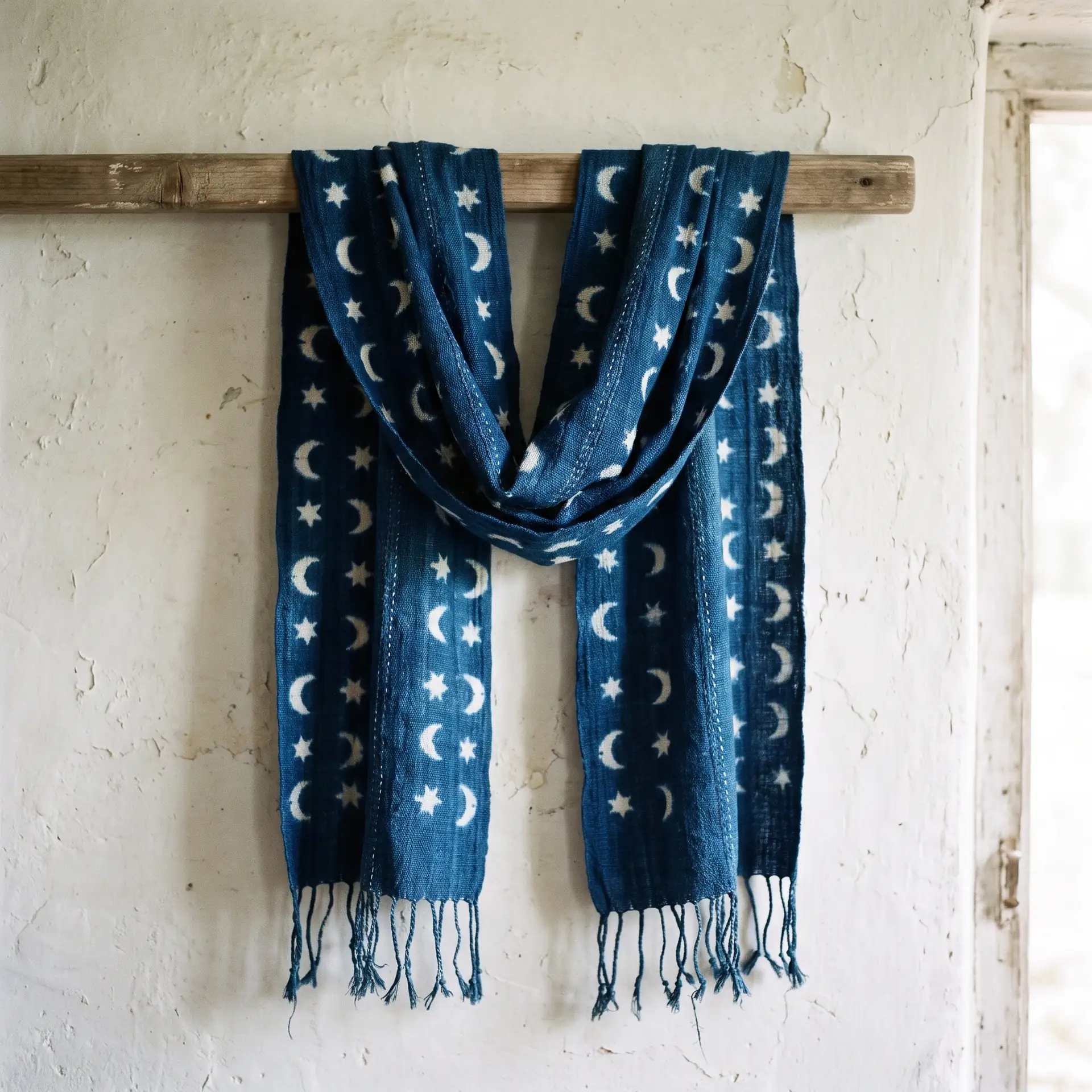
Scarf
Crescent moons and stars
180 × 60 cm
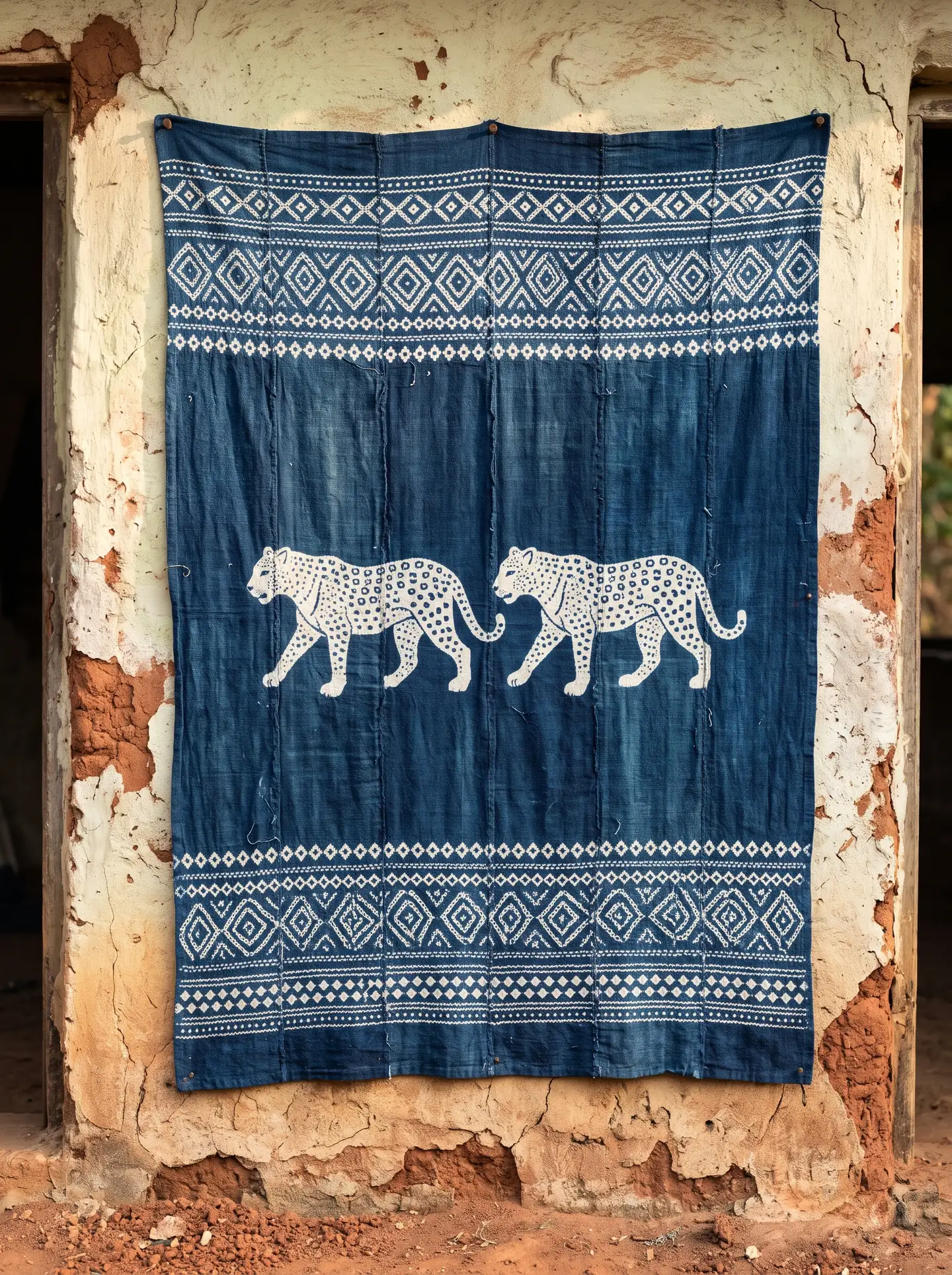
Wall piece
Paired leopards in a border of lozenges
200 × 120 cm
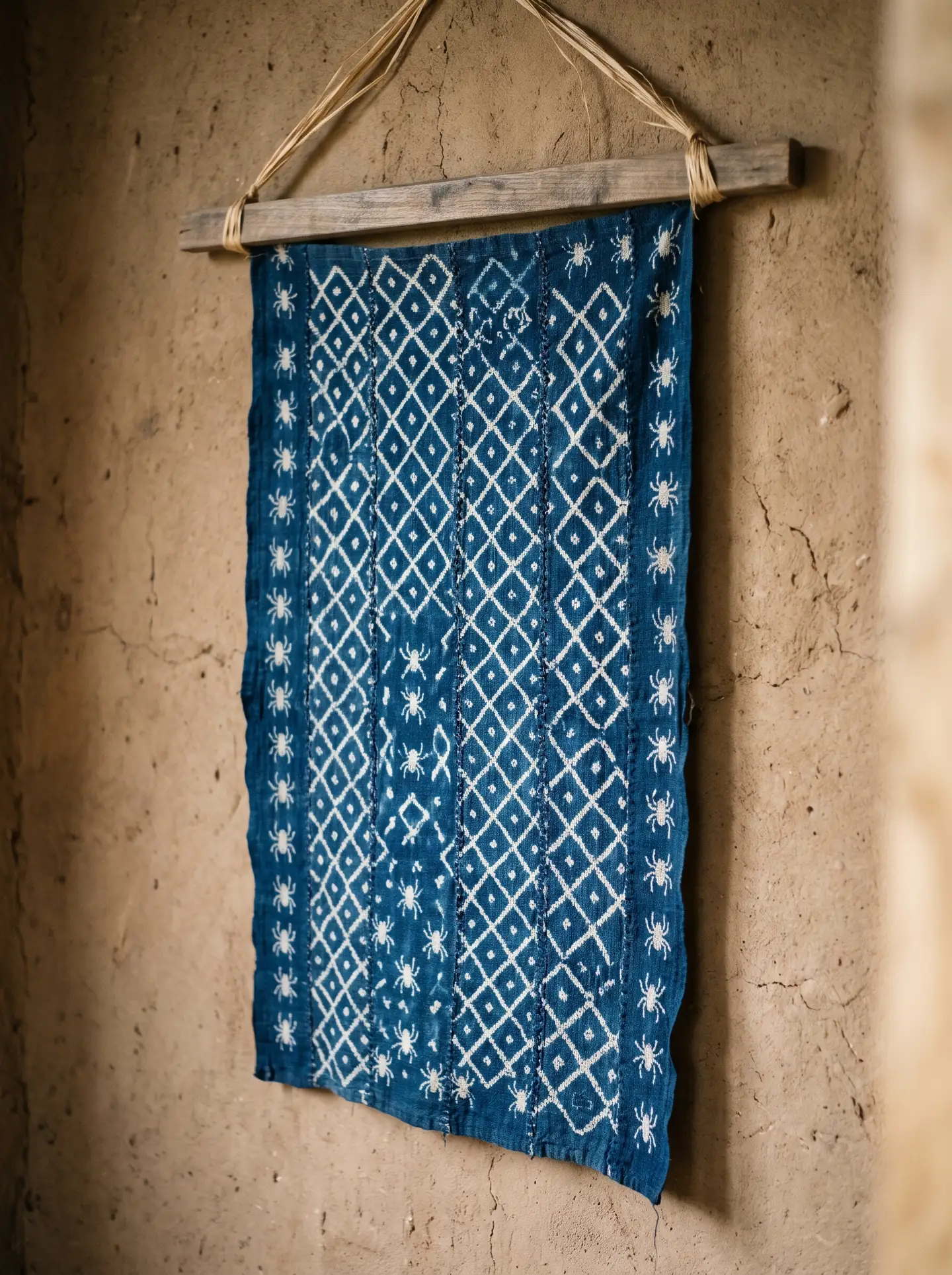
Wall piece
A grid of diamonds and tarantulas
120 × 90 cm
How we make a piece
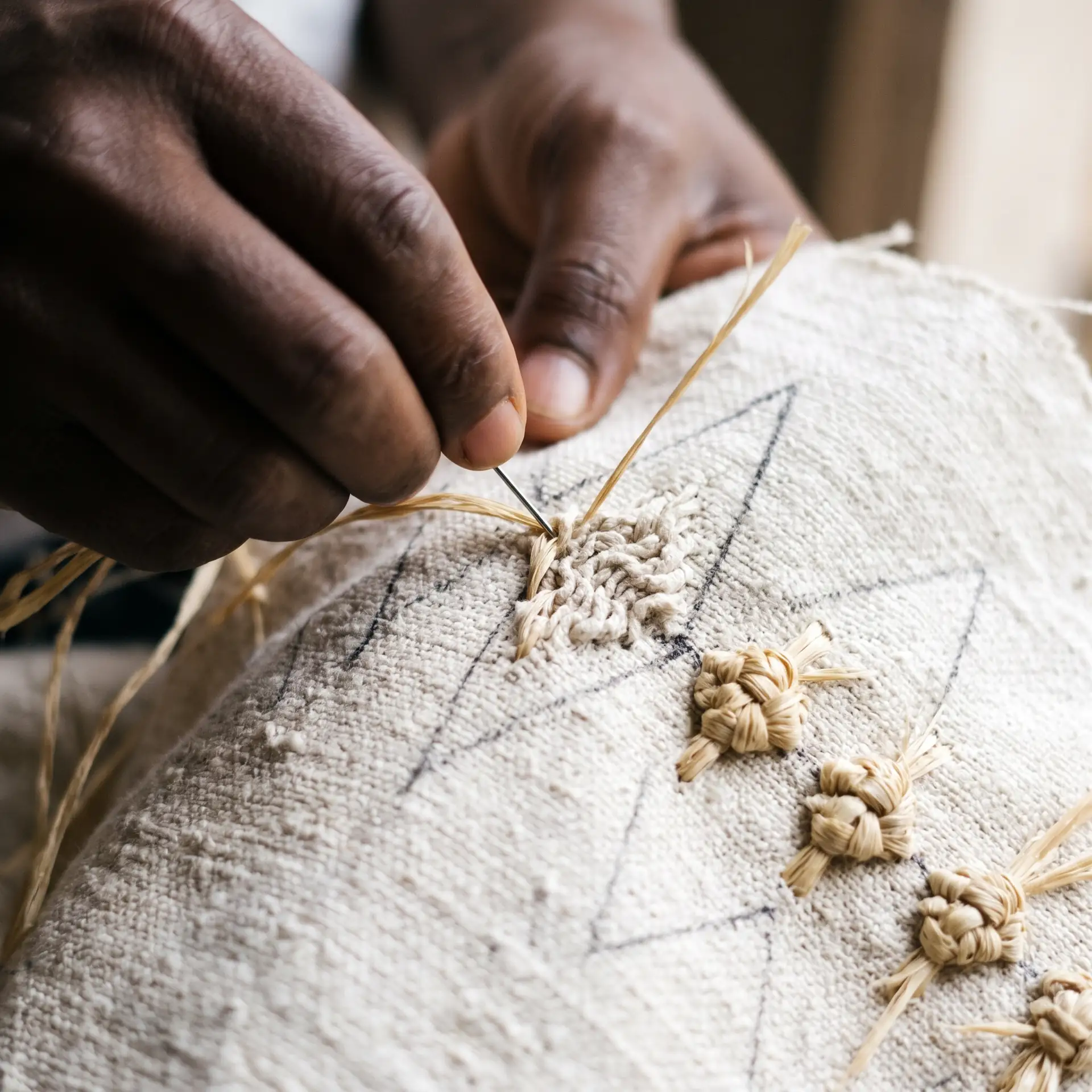
1 / 3
We draw the motifs on white cotton and stitch around them with raffia, pulled so tight that the dye cannot reach them.
2 / 3
The cloth goes into the pit and comes out green. In the air it turns blue, and every dip makes it deeper.
3 / 3
Once it has dried, we cut and pull out every stitch. The cotton they covered stayed white: those are the motifs.
Visit
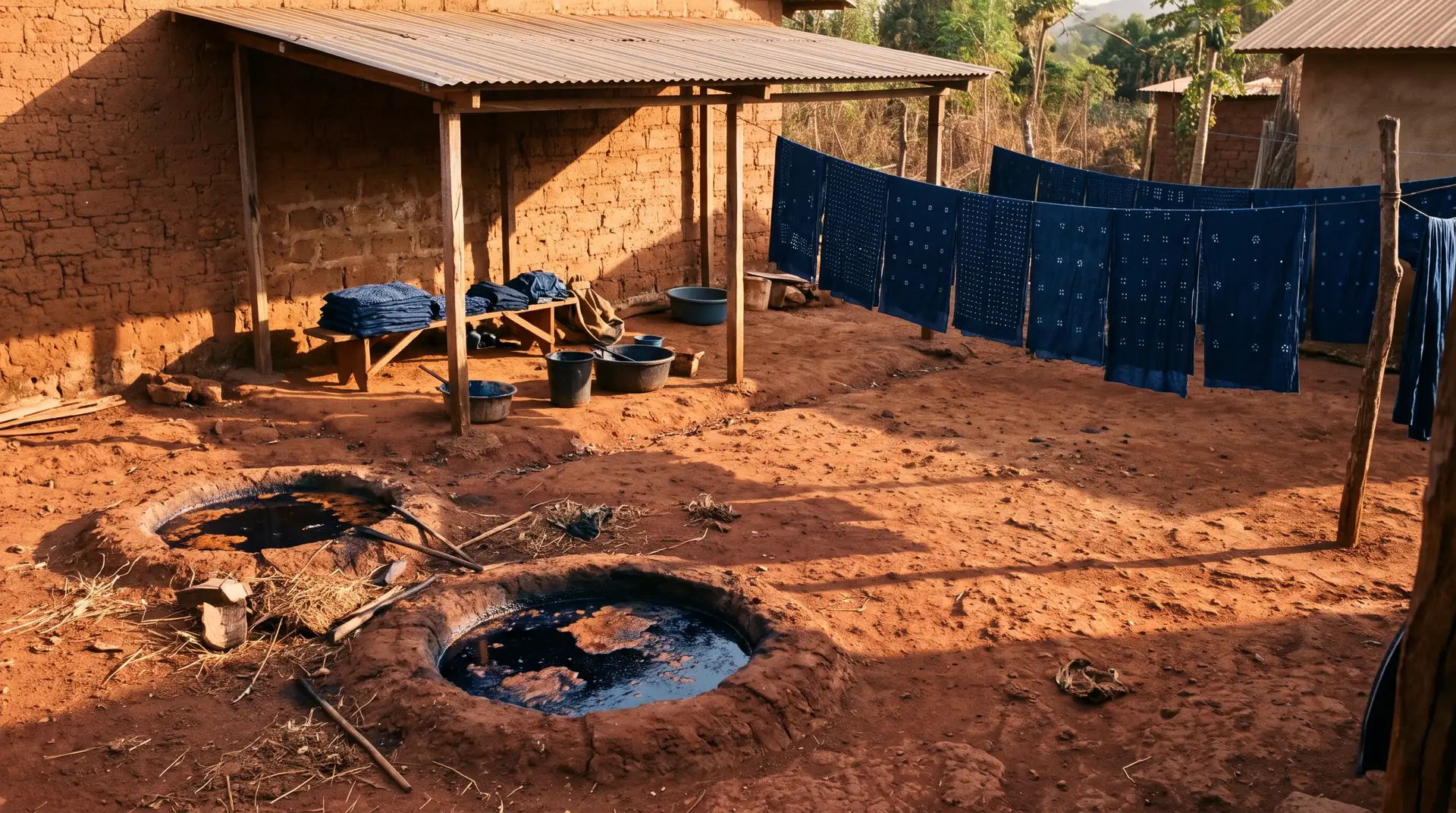
Our courtyard is off the Rue des Artisans, in the Njiyuom quarter of Foumban. Mornings are the best time: that is when the cloth goes in.
Off the Rue des Artisans